
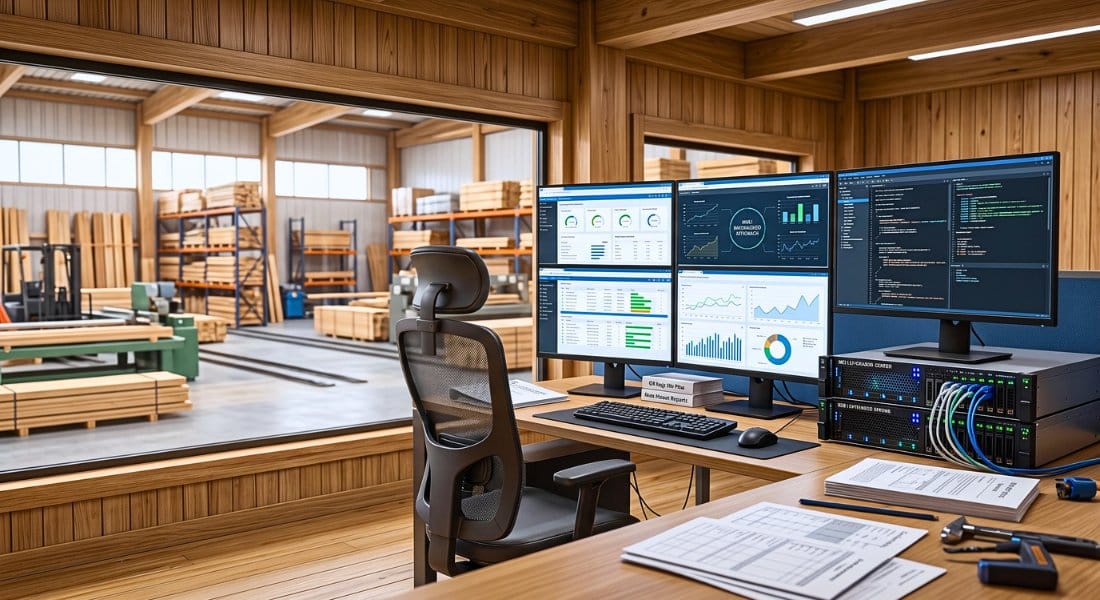
IBM i modernization does not always require a platform replacement, GUI screens, or pricey software tools. One mid-market manufacturer illustrates that point with four years of reported results.
A treated wood company running mission-critical operations on a 9406-270 at V4R4 faced a retiring programmer and seven departments using stale reports. Leadership was also weighing whether to replace a custom system that had supported the business for decades.
They chose to modernize instead, preserving the IBM i while updating the environment around it. The company reported a tenfold profit improvement during the following four years.
IBM i modernization can preserve proven custom software while bringing the surrounding environment onto supported technology. In this case, software certification, right-sized IBM Power server, and real-time data access gave seven departments better tools without replacing IBM i proprietary applications.
The Business Case for Keeping IBM i
When a key programmer retires, leadership may see the moment as an opportunity to replace the existing system. For mature custom applications, however, that path can cost more and disrupt operations more than the initial proposal suggests.
This manufacturer's custom software wasn't simply old code that needed replacing. It contained years of operational logic specific to a niche industry covering telephone poles, railroad ties, bridge trusses, and treated lumber for structures. Moving that operational logic into another ERP would require careful documentation, rebuilding, integration work, and testing.
That does not mean platform replacement is always the wrong choice. However, replacement should be compared carefully with modernizing an existing system that still serves the business.
For this company, the better question centered on improving the IBM i environment rather than immediately replacing the platform. That change in perspective gave the organization another path forward.
The Modernization Work Behind the Result
The first challenge involved the custom application and the development tools used to build it. The retiring programmer had worked with a third-party development tool, so the team needed to understand the application’s structure first. That analysis required time before the software could move safely into a newer environment.
Rebuilding and certifying the application for V7.5 became a two-year project. The timeline reflected the work required to understand, update, certify, and thoroughly test the modernized software. Careful testing reduced production risk during a transition involving applications that supported daily manufacturing operations.
Version currency also mattered because supported IBM i releases provide the normal framework for maintenance, PTFs, and ongoing operating system support. Once the software was certified on V7.5, the next phase focused on giving the business better access to information already inside the system.
Real-Time Access Changed Daily Operations
Before modernization, seven departments relied on reports produced at the end of the previous day or early the following morning. Inventory, purchasing, production scheduling, and customer commitments were therefore based on information that could already be several hours old.
That was not an IBM i platform limitation. It reflected the way the existing application and reporting environment had been built. Their old system already held the operational data, but the development environment had not been updated to make that information available in real time.
Bob Losey has spent more than four decades helping mid-market organizations work through similar IBM i infrastructure and application decisions.
"Once they got on V7.5, the programming team could say, 'How would you like this to be different?' The answer was clear: seven different departments wanted real-time access to inventory and business analytics. Prior to that, they had to rely on reports from end-of-day or early morning. Once they got that, they had a tenfold profit improvement over the four years since we started working with them." – Bob Losey, Founder and President, Source Data Products
Real-time inventory visibility across seven departments did not require the company to replace IBM i application software with another ERP platform. It required moving the custom application onto V7.5 and then asking operational teams which information would help them work more effectively.
A Low-Disruption IBM i Migration Process
A modernization project of this size naturally raises questions about downtime and disruption during the final migration. For this specialty manufacturer, the migration plan needed to protect normal operations while moving a long-standing custom environment onto newer infrastructure.
"With each application enhancement, my client raved. He had real-time access to critical data. As this real-time data got pushed out to each division, he marveled how well the teams could work together more efficiently and effectively." – Bob Losey, Founder and President, Source Data Products
A Practical Modernization Path for Similar IBM i Shops
IBM i environments with aging software and a shrinking internal knowledge base can benefit from a close look at this case. The platform itself may still support the business well even when the surrounding software, reporting tools, or infrastructure need attention.
The IBM i platform's object-based architecture is one reason organizations can maintain applications across long hardware and operating system lifecycles. IBM i manages programs, files, and other information as system objects, so applications don't need to work directly with physical storage locations.
That architecture can be useful during modernization because existing application logic may remain valuable while the surrounding environment changes. A platform replacement may therefore not be necessary for every organization facing an aging IBM i environment.
A structured modernization deserves consideration when custom applications still contain business logic that would be expensive or difficult to reproduce elsewhere.
The process can begin with certifying the software on a supported IBM i release appropriate to the environment. From there, the organization can right-size infrastructure and improve access to the operational information already available inside its applications.
Cloud400 disaster recovery can also add recovery options around a modernized hosted IBM i environment after the migration is complete.
FAQs About IBM i Modernization Planning
What does IBM i modernization typically involve for a mid-market manufacturer?
IBM i modernization can include moving from an unsupported operating system to a supported release appropriate to the current hardware and applications. It may also involve certifying custom software, updating development tools, right-sizing infrastructure, improving reporting, and moving workloads into a hosted environment. For many mid-market manufacturers, modernization does not automatically require replacing IBM i or rebuilding mature applications. The goal is to determine which existing capabilities remain valuable and which parts of the surrounding environment need updating.
How long does certifying custom IBM i software for a newer OS version take?
The timeline depends heavily on the application, development tools, documentation, integrations, version gap, and required testing. Straightforward applications with current documentation may take considerably less time than deeply customized environments built with older third-party development tools. Projects involving retiring programmers or limited documentation may require months or longer for complete analysis, certification, and testing.
Is it better to replace IBM i with a cloud ERP or modernize the existing system?
The better path depends on the condition of the current application, business requirements, costs, integrations, staffing, and long-term technology plans. Organizations with deeply customized IBM i applications should carefully value the operational logic already contained inside those systems. Recreating that logic on another platform can add significant development, integration, testing, training, and implementation work. Modernization may offer a less disruptive alternative when the existing application still serves the business effectively.
What if the programmer who built our custom IBM i software is no longer available?
This is a common challenge for organizations running mature custom IBM i applications developed over many years. When the original developer used third-party tools or left limited documentation, the first step should be a structured application analysis. The goal is to understand the code, business rules, development tools, interfaces, and dependencies before choosing a modernization path. Starting with that analysis reduces the chance of discovering important application dependencies later in the project.
Will an IBM i modernization migration disrupt operations?
A carefully planned IBM i migration can be completed with limited disruption when testing and preparation happen before the final cutover. Source Data uses workload sizing, parallel testing, system saves, validation, and scheduled cutover windows to prepare hosted environments before production moves. The exact migration window depends on system size, connectivity, applications, integrations, and the amount of data involved. Source Data's Cloud400 IBM i hosting page provides more detail about its hosted migration approach.
How does IBM i LPAR right-sizing affect performance after modernization?
Right-sizing matches processor, memory, and storage resources more closely to what the IBM i environment actually requires. Physical servers often provide more capacity than smaller workloads regularly consume, especially after years of hardware and application changes. A properly sized hosted LPAR should provide enough resources for normal workloads while leaving appropriate capacity for peak activity and future needs. Performance depends on correct sizing, storage, application behavior, network connectivity, and the workload running inside the partition.
What is the business case for IBM i modernization versus full replacement?
The comparison should include the cost of rebuilding custom logic, implementation time, integrations, training, infrastructure, support, and operational disruption. Organizations should then compare those costs with updating the existing application, operating system, infrastructure, reporting, and support model. For mature custom IBM i environments, modernization can compare favorably when the existing application still meets important business requirements. The 60-Day Cloud400 Validation also gives teams a practical way to evaluate hosted IBM i before committing.
Your IBM i Environment Deserves an Honest Assessment
If your IBM i environment has reached a similar crossroads, platform replacement is not the only option worth considering. A structured modernization assessment can show whether the existing application still supports the business and which parts of the environment need updating.
That may include software certification, a supported IBM i release, right-sized hosting, improved reporting, or stronger disaster recovery.
Review your IBM i options with Source Data to see whether modernization or replacement better fits your current environment and future plans.
ABOUT THE AUTHOR
Bob Losey | Founder & President, Source Data Products | 45+ years in IBM midrange systems since 1979 | 4,000+ clients served | Premier IBM Business Partner | Developer of Cloud400 hosting platform | IBM i Technical Certifications (2000-2020) |

